Safari at a Glance

Safari at a Glance
Two Countries, One Migration
17 Days · Nairobi · Maasai Mara · Lake Nakuru · Amboseli · Tarangire · Ngorongoro · Serengeti · Arusha
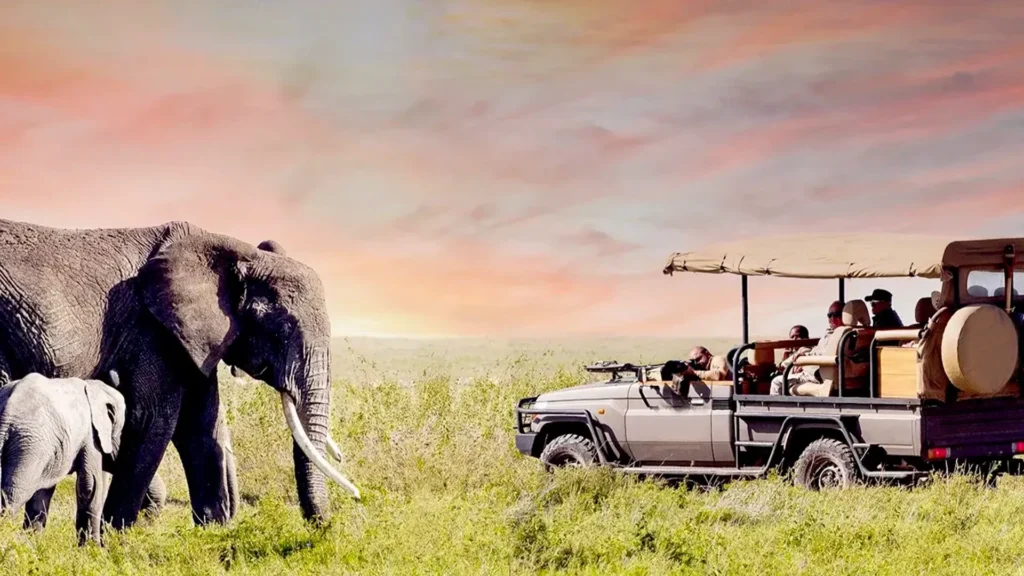
The Great Migration does not recognise borders. Each year, more than a million wildebeest move in a great circuit across the Maasai Mara and the Serengeti, following the rain and the grass in one of the natural world’s most ancient and unstoppable rhythms. This journey follows that same arc. Beginning in Kenya, it moves through the Maasai Mara’s legendary plains and Amboseli’s elephant country beneath Kilimanjaro, before crossing overland into Tanzania to take in Tarangire’s baobab forests, the extraordinary wildlife concentration of the Ngorongoro Crater, and the boundless Serengeti. Seventeen days across two countries, private and unhurried, tracing the route that the animals themselves have always known.
For those who want the full story of East African wildlife, this is the journey that tells it.
The Kenya portion stands beautifully on its own as a 7-day safari. Guests wishing to extend into Tanzania simply continue overland across the Namanga border without breaking stride.
Detailed Safari

Day 1: Arrival in Nairobi
Nairobi
Your Wondrous Wild team meets you at Jomo Kenyatta International Airport and handles the welcome from the moment you land. A private transfer brings you to your Nairobi hotel, and the rest of the day is yours to settle in. If time allows before the journey north begins tomorrow, an optional visit to the David Sheldrick Wildlife Trust elephant orphanage or the AFEW Giraffe Centre offers a gentle, meaningful start to a safari built around Africa’s wildlife.
Day 2: Into the Maasai Mara
Nairobi · Maasai Mara National Reserve
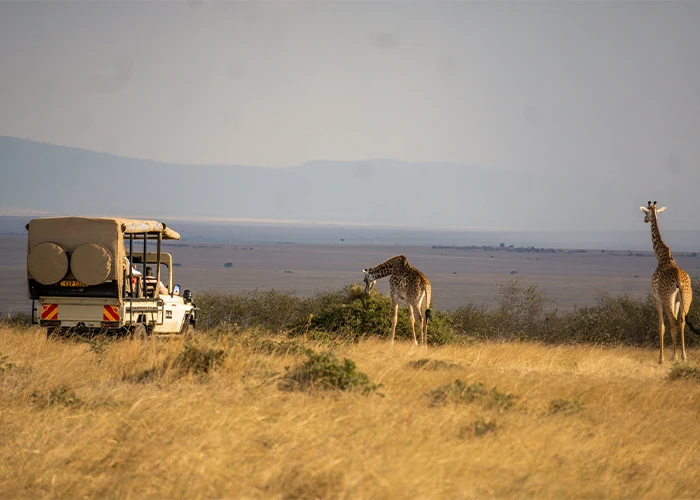
After breakfast, the drive southwest begins, the city falling away as the road descends into the Great Rift Valley. The viewpoint stop tells a story of geological time measured in millions of years, and then the drive continues on toward the reserve. The Maasai Mara receives you in the afternoon with a first private game drive across its open plains, the grassland stretching in every direction, the wildlife going about its business in the fading afternoon light. The camp fire that evening feels entirely earned.
Day 3: A Full Day in the Mara
Maasai Mara National Reserve
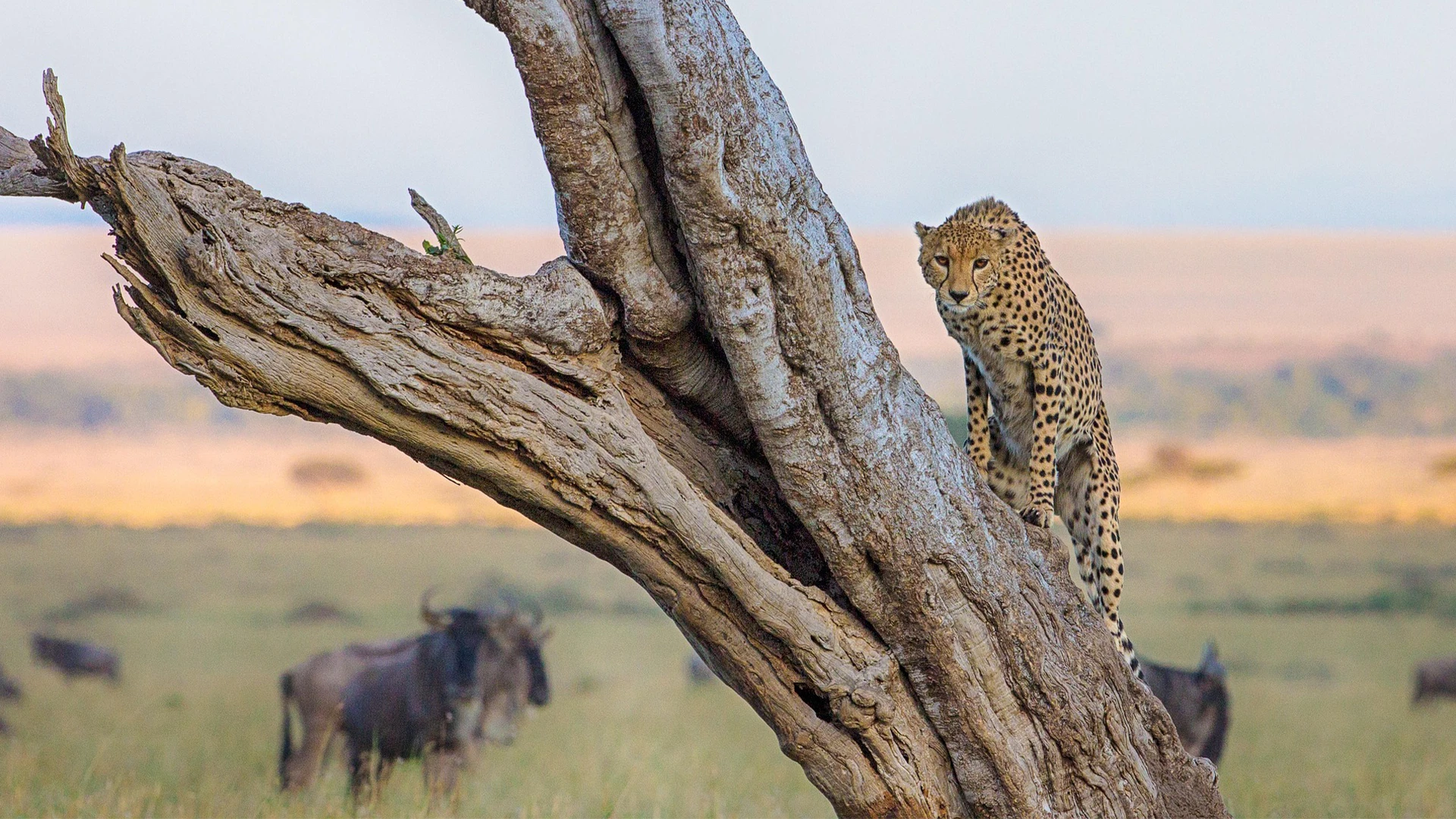
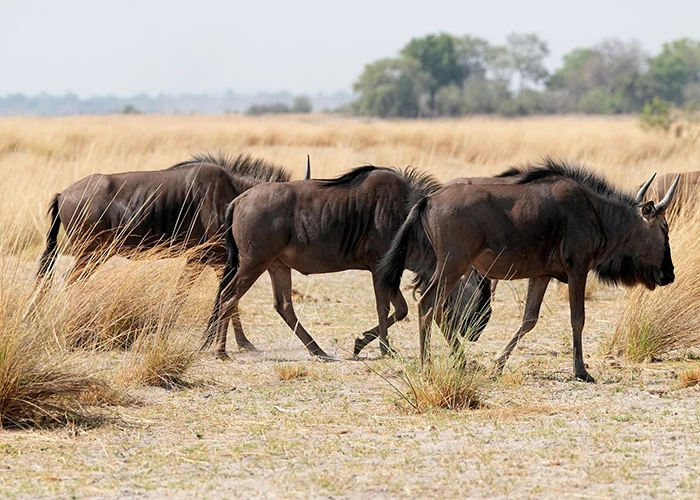
One full day is given to the Mara completely. Morning drives find the predators most active in the cool early hours, the big cats moving through terrain they know intimately. Lion, leopard, cheetah. The Mara River draws hippos and crocodiles in numbers that make the banks worth watching for extended periods. In season, the wildebeest herds that fill these plains from horizon to horizon are among the most extraordinary sights in the natural world. An optional hot air balloon safari at dawn offers a perspective that no vehicle can provide.

Day 4: Lake Nakuru
Maasai Mara – Lake Nakuru National Park
An early morning game drive squeezes the last of the Mara from the morning before the drive north to Lake Nakuru begins. The park is compact and enclosed, and that containment gives the game drives here a different quality – intimate, close, deliberate. Black and white rhinos move through yellow fever woodland that glows in the afternoon light. Rothschild giraffes browse at the tree line. Along the shoreline, flamingos gather when conditions draw them in, turning the water a colour that takes a moment to fully believe.
Day 5: Amboseli Arrival
Lake Nakuru – Amboseli National Park
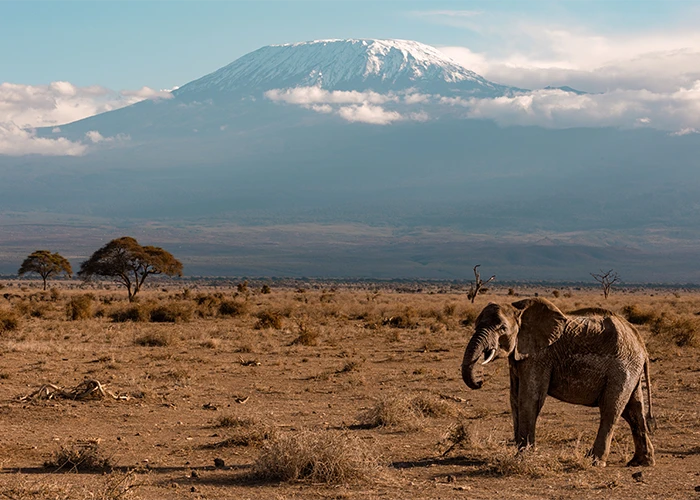
The drive south from Nakuru passes through the Kenyan highlands before the plains open up toward the Tanzanian border and Kilimanjaro fills the southern horizon. Amboseli announces itself this way, the mountain making the introduction long before the park gates arrive. A short game drive in the late afternoon catches the light at its most flattering, the dust rising from the dry lakebed as the elephant herds move through it, the mountain watching over everything from above.
Day 6: Amboseli, All Day
Amboseli National Park
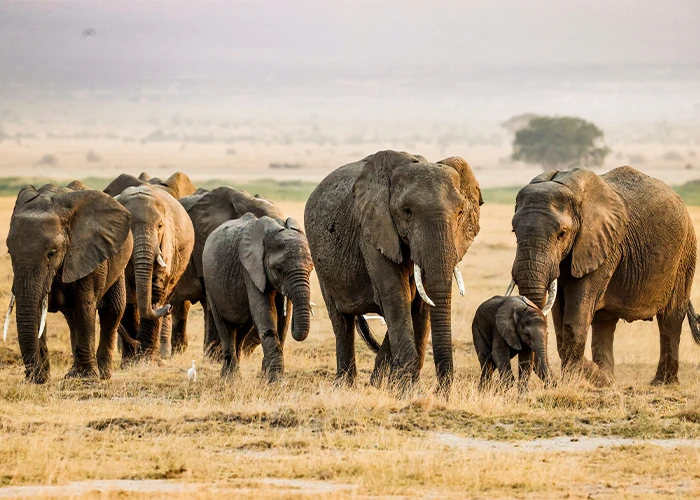
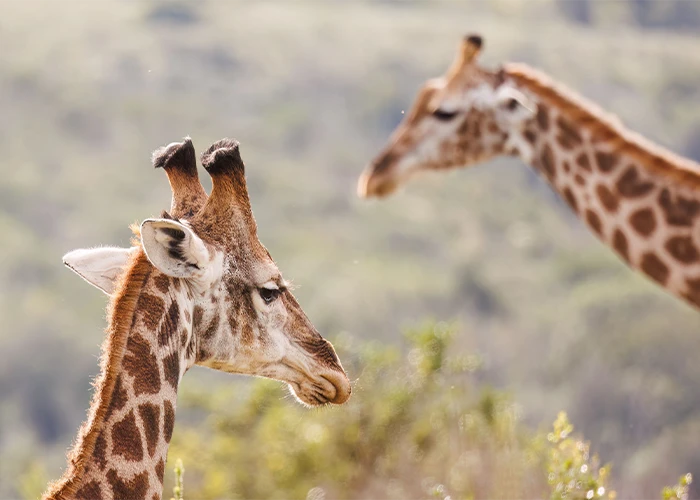
A full day in Amboseli dedicated entirely to the landscape and the animals that define it. The elephant herds here are among the continent’s most studied, their movements and family structures known in detail by researchers who have spent decades among them. Morning and afternoon drives explore the swamps, plains, and acacia woodlands that make up the park’s varied terrain, the mountain a constant presence on the southern edge of everything. Buffalo, giraffe, zebra, and an extraordinary diversity of birdlife fill out a day that never really needs the Big Five to feel complete.
Day 7: The Border
Amboseli – Namanga – Tarangire National Park, Tanzania
For guests ending the journey in Kenya, a transfer back to Nairobi this morning brings a deeply satisfying six-night safari to a close.
For those continuing, the overland crossing into Tanzania at Namanga marks one of the journey’s great transitions. The border formalities pass, and the landscape on the other side shifts almost immediately. The drive continues to Tarangire National Park in time for an afternoon game drive, the ancient baobab trees rising from the dry riverbeds like something from a different geological era entirely.
Day 8: Tarangire, Fully
Tarangire National Park
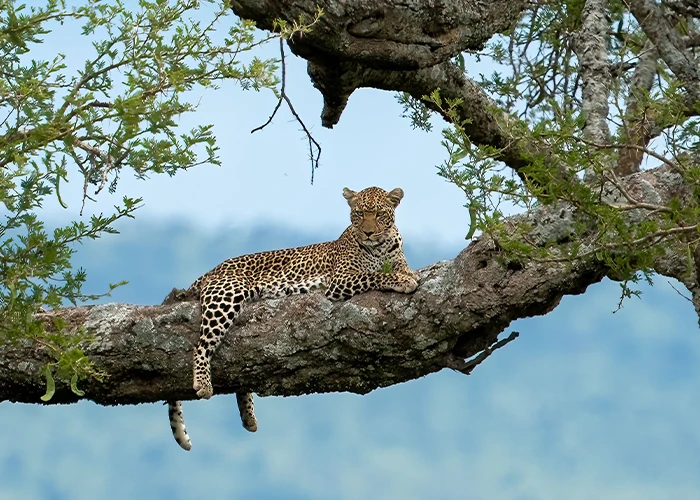
A full day in Tarangire reveals a park that rewards those who linger. The Tarangire River is the ecosystem’s spine, drawing wildlife in the dry season in concentrations that rival anywhere in East Africa. Elephant herds of remarkable size move between the river and the woodland. Lion, leopard, and a wide range of plains game share the landscape with birdlife of extraordinary variety. The baobabs that define Tarangire’s character grow older and more monumental with every game drive, each one a landmark in itself.
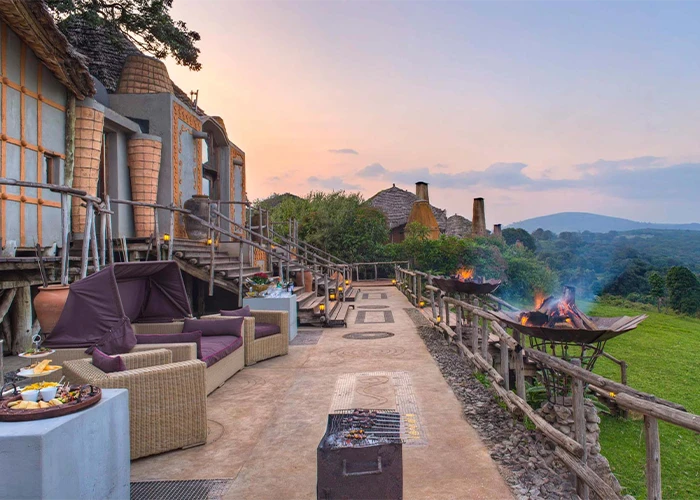
Day 9: Into the Ngorongoro Highlands
Tarangire – Karatu
The drive from Tarangire to Karatu passes through the Maasai steppe and up into the highlands that surround the Ngorongoro Conservation Area, the landscape cooling and greening as the altitude rises. Karatu sits on the crater’s edge and serves as the base for the next three nights, a small town with its own quiet rhythm that provides a grounded contrast to the grandeur of what surrounds it.
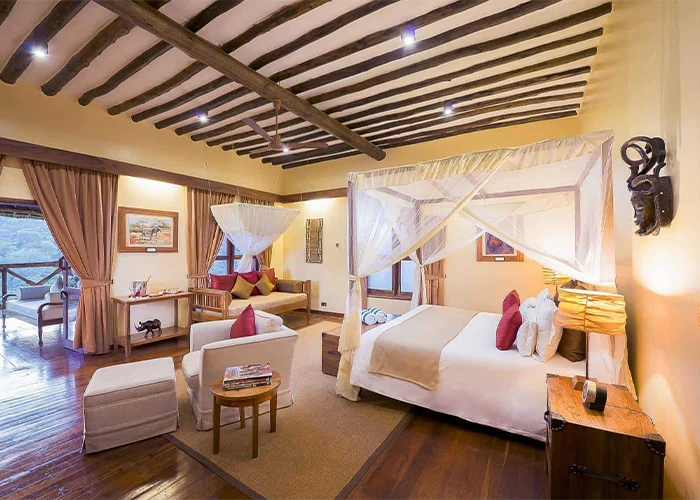
Day 10: Into the Crater
Karatu – Ngorongoro Conservation Area
The descent into the Ngorongoro Crater is one of Africa’s great arrivals. The caldera walls drop away on all sides as the vehicle winds down into a landscape that has been holding its wildlife in relative isolation for hundreds of thousands of years. The crater floor supports one of the densest concentrations of large mammals anywhere on earth: lion, leopard, elephant, black rhino, hippo, and vast herds of wildebeest and zebra that never leave. A full day here feels simultaneously overwhelming and not quite enough.

Day 11: Lake Manyara and the Crater Rim
Karatu – Lake Manyara
A second day from the Karatu base opens up Lake Manyara National Park as an option – a long, shallow lake set beneath the Rift Valley escarpment, known for the tree-climbing lions that lounge in the fever trees along its shores and the groundwater forest that lines its western edge. It is a park of a very different character to anything visited so far, lush and concentrated, the birdlife exceptional and the atmosphere surprisingly intimate for a place of such variety.
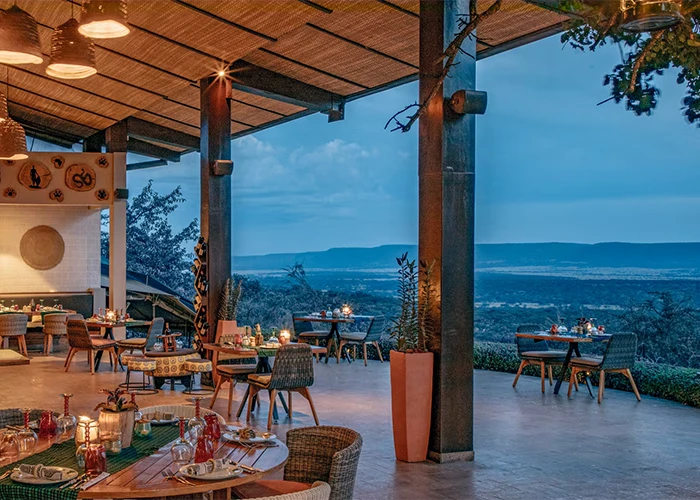
Day 12: Across the Conservation Area into the Serengeti
Karatu – Serengeti National Park
The drive across the Ngorongoro Conservation Area toward the Serengeti is itself a game drive, the open landscape of the conservation area offering wildlife sightings en route before the Serengeti’s boundary arrives and the plains extend beyond what the eye can comfortably hold. The Serengeti is where the Migration story reaches its fullest expression, and an afternoon game drive on arrival begins to reveal the scale of what this ecosystem holds.
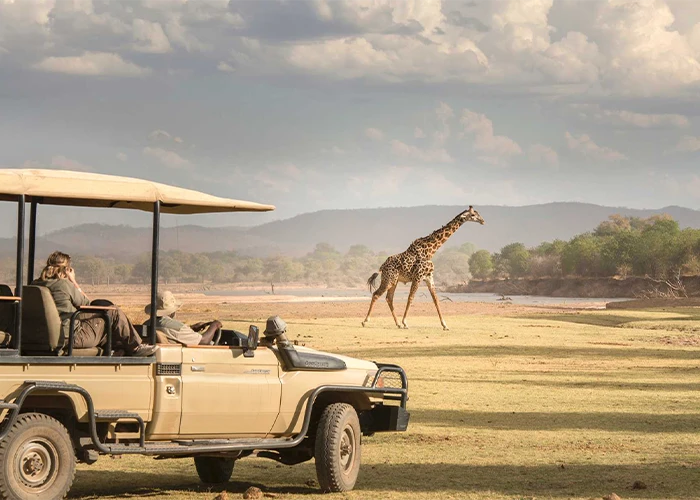
Days 13 & 14: The Serengeti
Serengeti National Park
Two full days in the Serengeti give the journey time to settle into the rhythm of Africa’s most celebrated wildlife landscape. The plains seem to go on indefinitely, and the wildlife that moves across them reflects that abundance. Predator sightings are consistently excellent: cheetah on open ground, leopard in the kopjes, lion in family groups that can number twenty or more. When the Migration is present, the herds fill the plains with a sound and a scale that has no real equivalent anywhere else on earth. Two days here barely scratches the surface. It is always enough to make you want to return.

Day 15: Last Morning in the Serengeti
Serengeti – Karatu
A final morning game drive in the Serengeti, the reserve offering its last chapter before the drive back through the Ngorongoro Conservation Area to Karatu. The return route carries familiar views that look different now, the journey having changed the way the landscape reads.
Day 16: Arusha and Departure
Karatu – Arusha
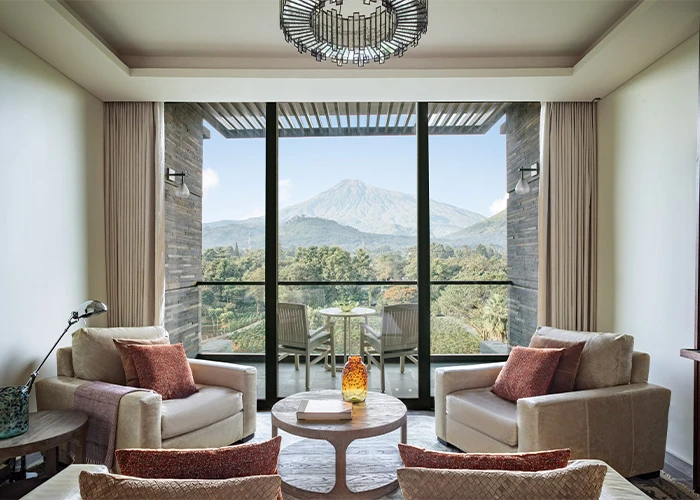
The transfer from Karatu to Arusha, Tanzania’s northern safari gateway, brings the journey to its close. Whether the onward flight leaves from Kilimanjaro International Airport or continues elsewhere, the city receives the end of the safari with its own particular energy. Seventeen days. Two countries. The Migration’s full circuit. East Africa does not get more complete than this.
This itinerary is a starting point. Our safari designers will tailor every detail around your pace, your group, and the moments that matter most.